Decimals: Computing the Total Purchase Cost

In this real-world math activity, students calculate the total cost of grocery items using unit rates and determine if their $100 budget is enough. Perfect for practicing decimals, multiplication, and proportional reasoning.

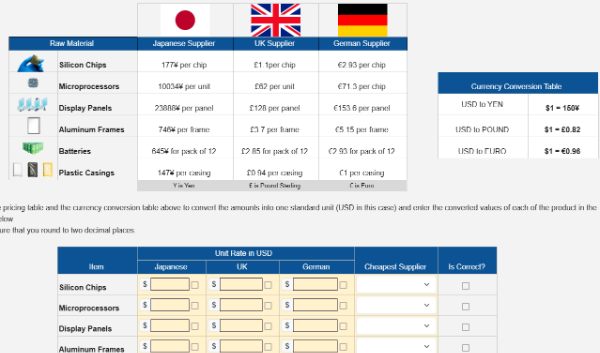
In this interactive, real-world budgeting worksheet, 7th grade students visit a virtual supermarket with a $100 budget to purchase a list of grocery items. Using a cost card that lists realistic prices per unit (e.g., per pound, gallon, or piece), students must calculate the total cost of each item based on quantity, sum the total, and determine whether they can afford all items — or if they’ll need extra funds.


This activity supports Common Core Math Standards 7.RP.A.1, 7.RP.A.2, and 7.EE.B.3 by engaging students in:

  • Unit rate calculations involving decimals
  • Real-life proportional reasoning
  • Multi-step problem solving with money
  • Budget analysis based on cumulative totals
  • Bar graph interpretation to identify the most expensive item


The worksheet is auto-graded, giving instant feedback on cost calculations and encouraging self-correction. A final extension question asks students to analyze a bar graph comparing item costs.


Key Features:


  • 🧮 Realistic unit rates and quantities
  • 💰 Budget decision-making scenario
  • 🔄 Auto-graded responses for immediate feedback
  • 📊 Bar graph data interpretation
  • ✍️ Great for classwork, homework, or financial literacy warm-ups


Learning Objective

Students will learn about using multiplication and subtraction in a real life scenario. The activity will ensure that students have mastered in the multiplication and subtraction operations and knows when to use them.

Randomization Available

If randomization is enabled, each student will receive:

  • A unique set of quantities to purchase for each grocery item
  • A different cost card with varied unit prices across pounds, gallons, and pieces

This ensures every student works on a personalized problem set, promoting independent thinking and preventing copying of answers.

💡 Tip: When assigning this activity to your classroom, you can optionally enable randomization to give each student a unique version of the problems. When you re-assign the same worksheet, each student will get a new set of questions, helping them master the content through repeated practice.

Decimals: Computing the Total Purchase Cost preview
Preview
Grade level
6, 7
Type
Mini Lab (real-world worksheet)
Duration
15 minutes
Auto-graded
Yes
Randomized per student
Yes
Common Core standards
7.RP.A.17.RP.A.27.EE.B.3
Topics
Numbers & OperationsFractionsRatioUnit Rate
Tags
Real WorldFinancial CalculationsHomeworkExit Ticket

Related grades 6, 7 activities

More interactive, auto-graded activities on the same standards and topics.

Mini LabGrade 7· 20 min

Budgeting for Thanksgiving Feast

In this Thanksgiving-themed math worksheet, students convert ingredient quantities into standard units and calculate the cost of preparing a holiday meal. It’s a real-world activity that strengthens unit conversion, proportional reasoning, and budgeting skills.

Mini LabGrades 7, 8· 20 min

Community Kitchen - Weekly Budget Planning

In this community kitchen budgeting activity, students convert recipe quantities and calculate the cost of each ingredient needed to prepare a holiday-style meal. Includes turkey, mashed potatoes, gravy, carrots, peas, cranberry sauce, and more.

Skill PracticeGrades 6, 7· 20 min

Halloween Races : Speed, Distance & Time

In this spooky Halloween-themed activity, students calculate the speed of different Halloween characters using the speed = distance ÷ time formula and determine who’s fastest in the crew. A fun and educational way to reinforce rate and proportional reasoning!

Mini LabGrade 7· 15 min

Cookie Ratios – Baking with Grandma’s Recipe

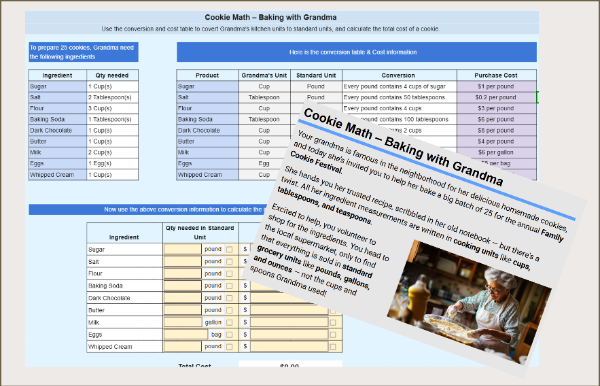
In this real-world math activity, students apply their understanding of ratios and fractions to convert Grandma’s recipe from kitchen units to standard grocery store units. Using a conversion chart and price list, they calculate the quantity and cost of each ingredient, determine the total expense for 25 cookies, and find the cost of one cookie.

LabGrades 6, 7· 120 min

Smoothie Fractions: Run the Bar

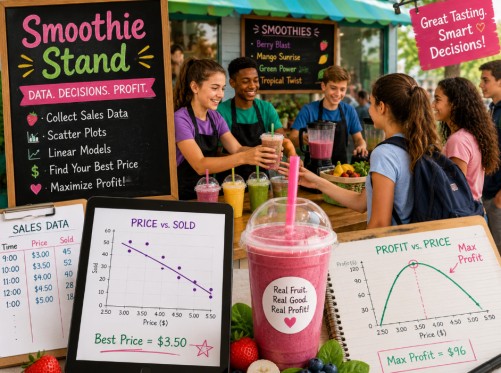
Students run a smoothie bar for a day, and every decision is a fraction problem with a real purpose. Six connected, auto-graded interactive worksheets covering multiply, divide, equivalent fractions, compare, and order. Carry-forward story keeps math meaningful. Common Core aligned. Run it in a day or across two weeks.