Solve multi-step real-life and mathematical problems posed with positive and negative rational numbers in any form (whole numbers, fractions, and decimals), using tools strategically. Apply properties of operations to calculate with numbers in any form; convert between forms as appropriate; and assess the reasonableness of answers using mental computation and estimation strategies. *For example: If a woman making $25 an hour gets a 10% raise, she will make an additional 1/10 of her salary an hour, or $2.50, for a new salary of $27.50. If you want to place a towel bar 9 3/4 inches long in the center of a door that is 27 1/2 inches wide, you will need to place the bar about 9 inches from each edge; this estimate can be used as a check on the exact computation*.
17 interactive, auto-graded activities for 7th grade students practising 7.EE.B.3. Mini Labs put the standard to work in a real scenario; Skill Practice builds fluency on the standard alone. Every one is randomized per student, so each learner gets their own numbers.
Students will use the simple interest formula and its variations to find the interest, principal to be deposited, and the interest rate they should be looking for to get $100,000 after 10 years for their dream house.
The activity revolves around the concept of baking a Christmas cake on a tight budget compared to the cost of purchasing one from a store. Students will be guided through ingredient conversions, cost calculations, and the joy of creating a homemade treat.
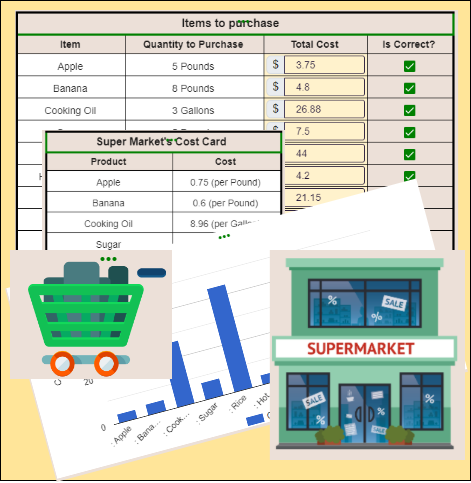
In this real-world math activity, students calculate the total cost of grocery items using unit rates and determine if their $100 budget is enough. Perfect for practicing decimals, multiplication, and proportional reasoning.
In this spooky Halloween-themed activity, students calculate the speed of different Halloween characters using the speed = distance ÷ time formula and determine who’s fastest in the crew. A fun and educational way to reinforce rate and proportional reasoning!
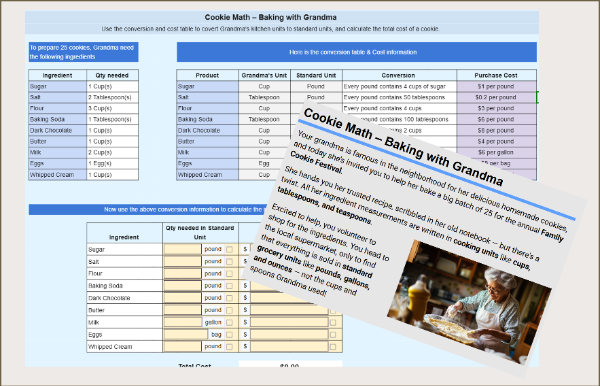
In this real-world math activity, students apply their understanding of ratios and fractions to convert Grandma’s recipe from kitchen units to standard grocery store units. Using a conversion chart and price list, they calculate the quantity and cost of each ingredient, determine the total expense for 25 cookies, and find the cost of one cookie.
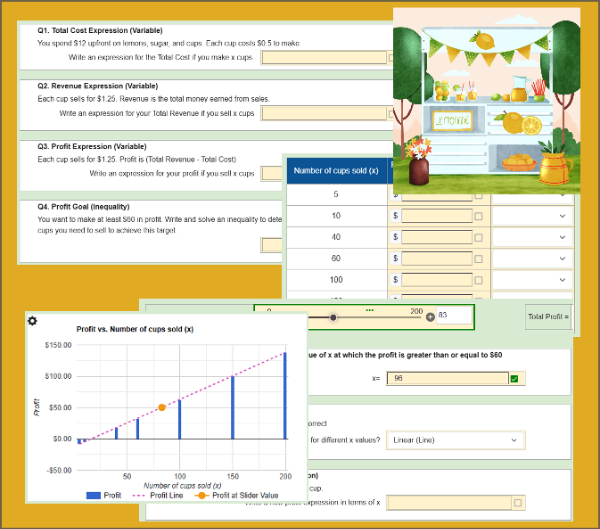
Help plan a lemonade stand by writing expressions for cost and profit, solving inequalities to reach a profit goal, and analyzing how the number of cups sold affects earnings. Students build a table, plot a linear graph, and use a slider to visualize how profit changes—making math both real and interactive!
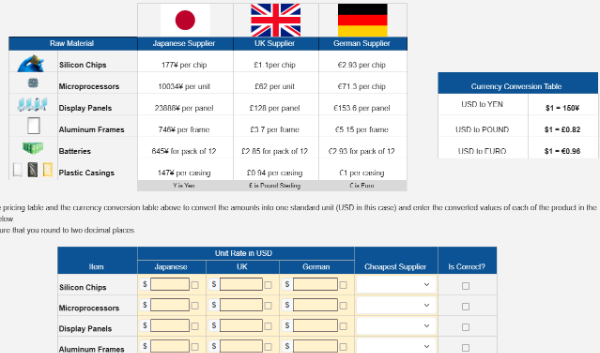
Students act as the CEO of a company, to find the cheapest country to purchase the raw materials, students will do unit conversion between different currencies.
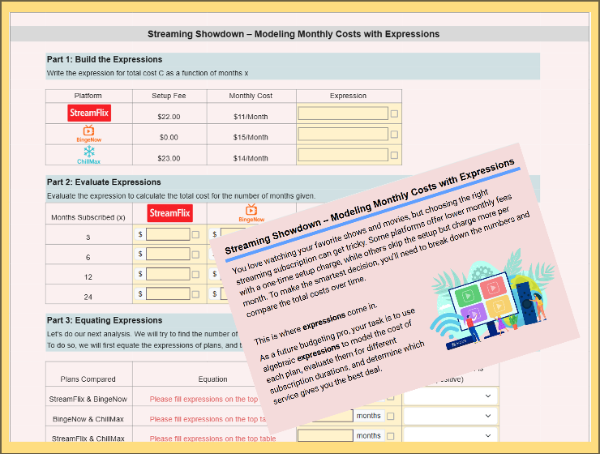
Students compare three streaming services by writing and evaluating algebraic expressions that model total subscription costs over time. They determine which plan is most cost-effective and justify their choice using math.
In this community kitchen budgeting activity, students convert recipe quantities and calculate the cost of each ingredient needed to prepare a holiday-style meal. Includes turkey, mashed potatoes, gravy, carrots, peas, cranberry sauce, and more.
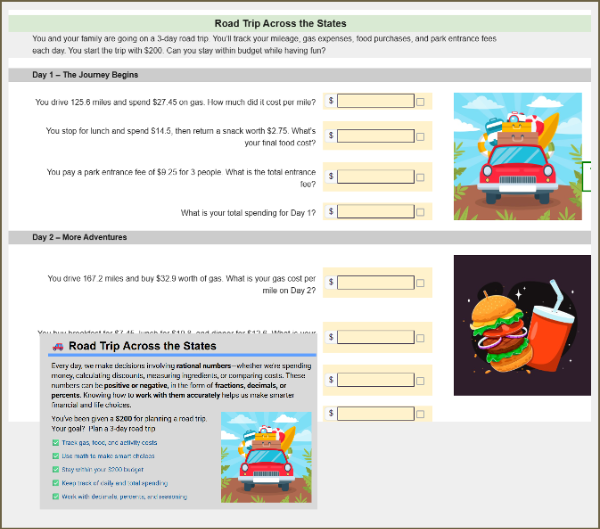
Track your budget on a 3-day road trip by calculating gas costs, food expenses, and entrance fees. Students solve multi-step problems using decimals and precents to stay within a $200 budget.
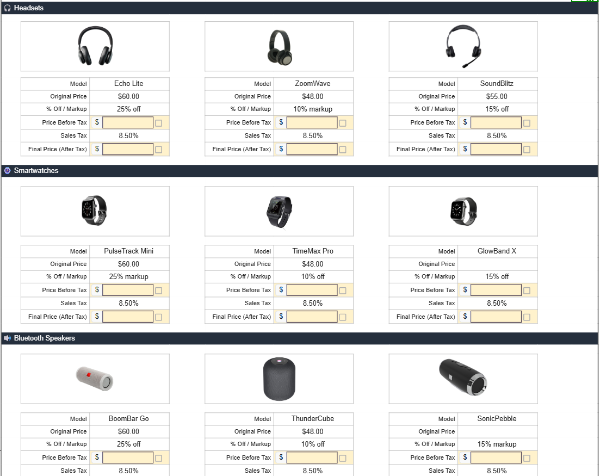
In this real-world math challenge, students use percent skills to shop smart at a tech store. They apply discounts, markups, and sales tax to build a tech bundle within a $150 budget, developing proportional reasoning and financial literacy.
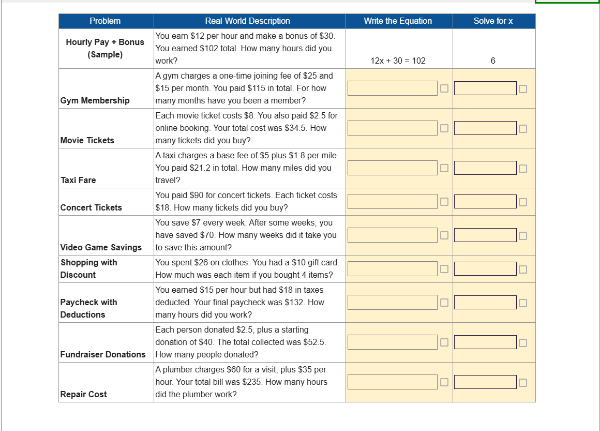
Practice solving real-world problems using one-step and two-step equations with rational numbers. Students write and solve equations based on scenarios like taxi fares, savings, and ticket purchases—perfect for building equation fluency.
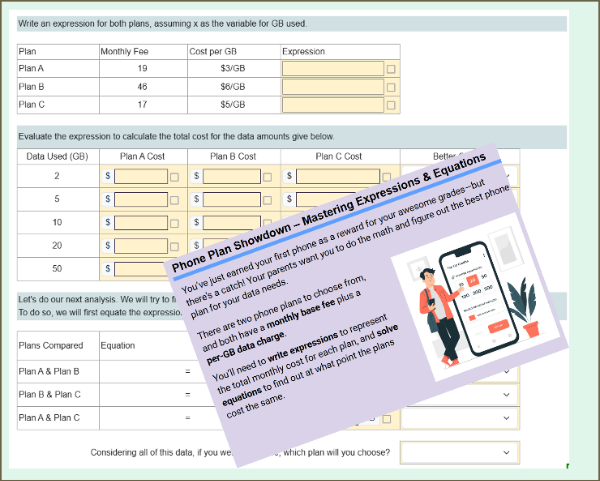
Students compare three different phone plans by writing algebraic expressions to model their monthly cost. They evaluate these expressions for different data usage amounts and determine at what point one plan becomes more economical than the others.
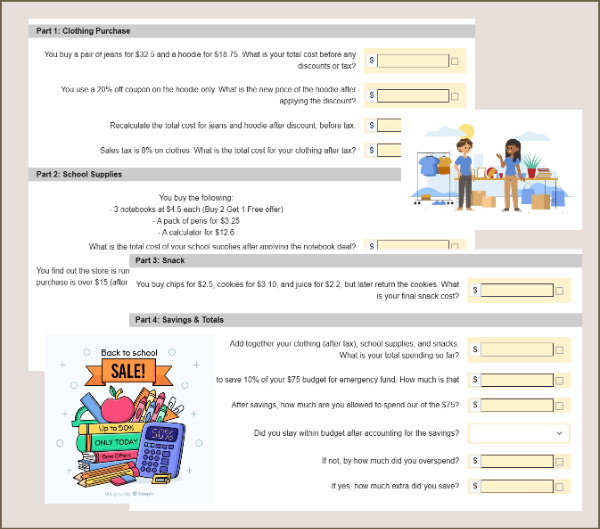
A real-world budgeting challenge where students apply rational number operations—decimals, fractions, and percentages—to stay within a $75 back-to-school budget.
In this Thanksgiving-themed math worksheet, students convert ingredient quantities into standard units and calculate the cost of preparing a holiday meal. It’s a real-world activity that strengthens unit conversion, proportional reasoning, and budgeting skills.
Students will use the simple interest formula and its variations to find the interest, principal to be deposited, and the interest rate they should be looking for to get $100,000 after 10 years for their dream house.
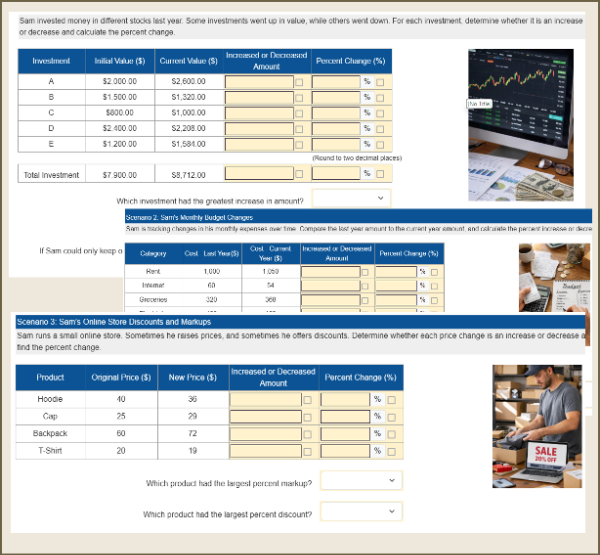
Students analyze real-world financial situations to calculate percent increase and decrease. Using a connected storyline, students examine changes in stock investments, monthly expenses, and online store prices. This worksheet builds proportional reasoning through table-based problems and supports randomized values for independent, auto-graded practice.