Use proportional relationships to solve multistep ratio and percent problems. Examples: simple interest, tax, markups and markdowns, gratuities and commissions, fees, percent increase and decrease, percent error.
13 interactive, auto-graded activities for 7th grade students practising 7.RP.A.3. Mini Labs put the standard to work in a real scenario; Skill Practice builds fluency on the standard alone. Every one is randomized per student, so each learner gets their own numbers.
Students will use the simple interest formula and its variations to find the interest, principal to be deposited, and the interest rate they should be looking for to get $100,000 after 10 years for their dream house.
The activity revolves around the concept of baking a Christmas cake on a tight budget compared to the cost of purchasing one from a store. Students will be guided through ingredient conversions, cost calculations, and the joy of creating a homemade treat.
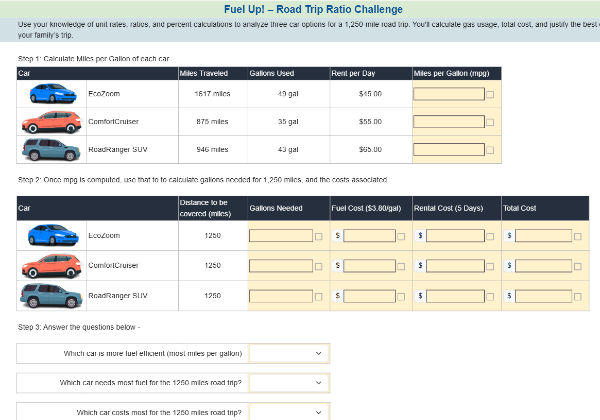
In this real-world math challenge, students use ratio and unit rate skills to plan a 1,250-mile road trip. They analyze past vehicle data, calculate miles per gallon, total costs, and compare options to choose the most cost-effective car.
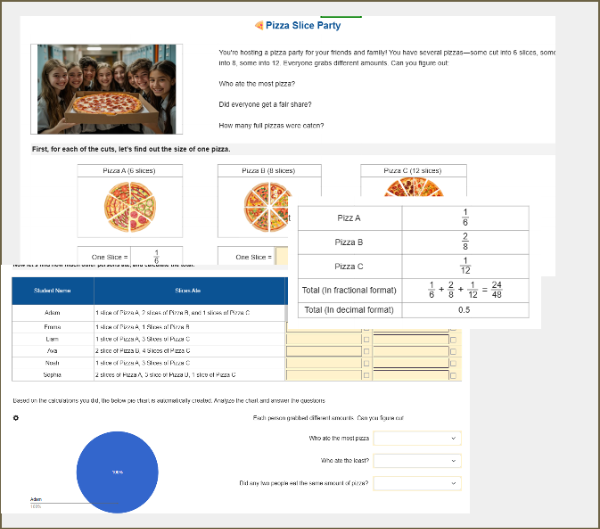
A fun and visual worksheet where students calculate how much pizza each person ate using fractions and decimals. Perfect for practicing proportional reasoning, comparisons, and data interpretation with minimal text and maximum engagement.
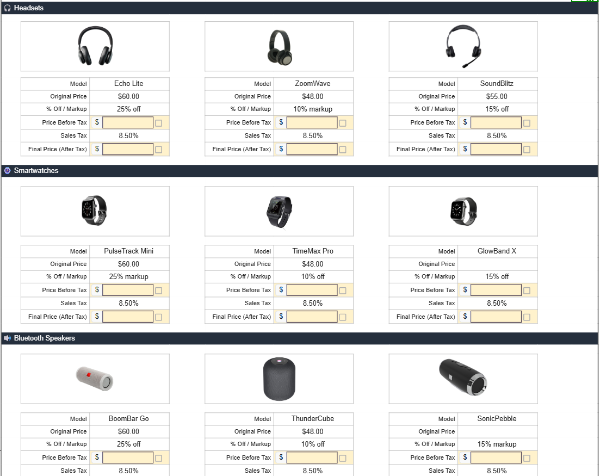
In this real-world math challenge, students use percent skills to shop smart at a tech store. They apply discounts, markups, and sales tax to build a tech bundle within a $150 budget, developing proportional reasoning and financial literacy.
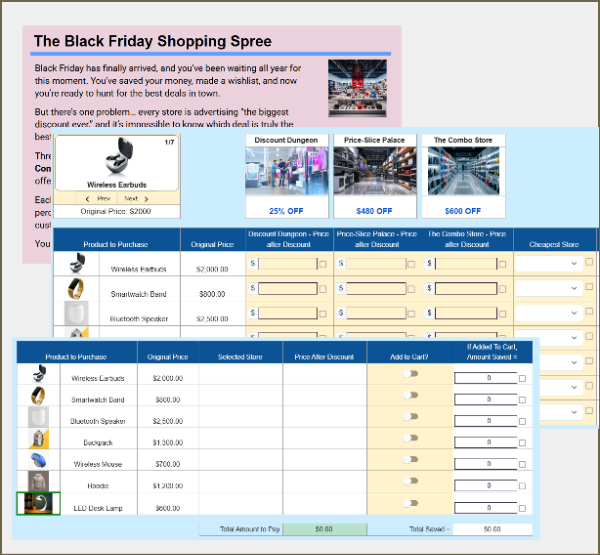
A fun, Black Friday–themed math activity where students calculate discounts, compare store prices, choose the best deals, and create a budget-friendly shopping cart. Perfect for teaching real-world percent applications and smart spending skills.
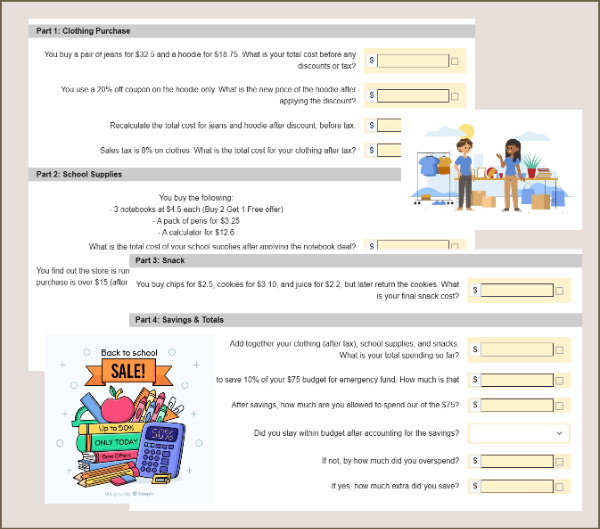
A real-world budgeting challenge where students apply rational number operations—decimals, fractions, and percentages—to stay within a $75 back-to-school budget.
Students will use the simple interest formula and its variations to find the interest, principal to be deposited, and the interest rate they should be looking for to get $100,000 after 10 years for their dream house.
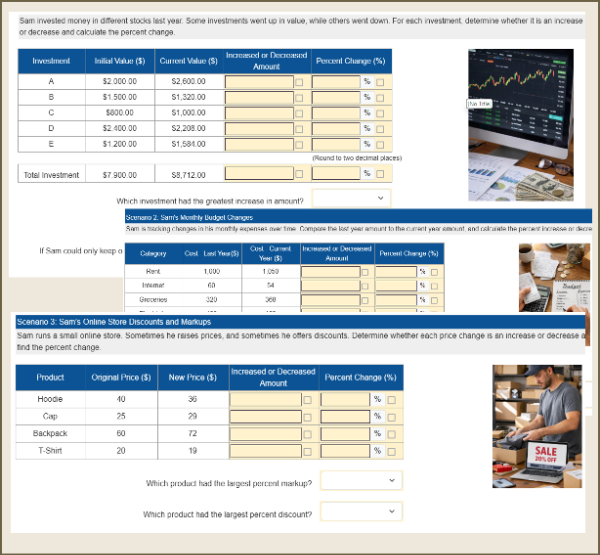
Students analyze real-world financial situations to calculate percent increase and decrease. Using a connected storyline, students examine changes in stock investments, monthly expenses, and online store prices. This worksheet builds proportional reasoning through table-based problems and supports randomized values for independent, auto-graded practice.
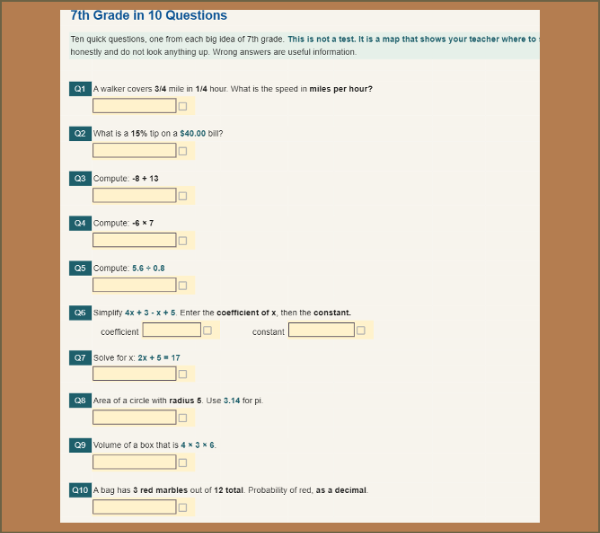
A fast, auto-graded readiness check that covers all ten big ideas of 7th grade in ten questions. Perfect for day one or two of 8th grade. Each question maps to one standard and scores separately, so your class dashboard becomes a heatmap showing exactly which skills are solid and which need review. Not a test, a map. Randomized values. CCSS 7.RP, 7.NS, 7.EE, 7.G, 7.SP.
Students apply ratios, percentages, and budgeting skills in this fast-paced, team-based math competition. As co-founders of a vehicle startup, they calculate production costs, analyze sales offers, and race through 10 business cycles—boosting engagement through real-world math, strategy, and collaboration.
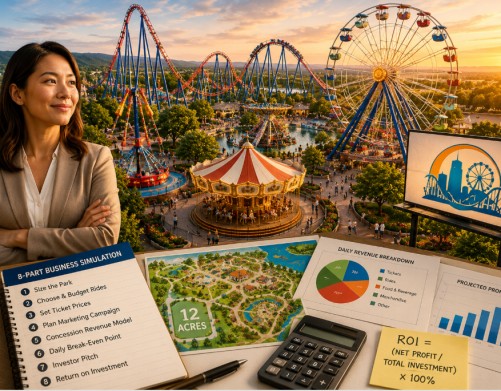
Theme Park Tycoon is an 8-part Grade 7 ratios and proportions project where students design Aurora Park for an investor. Every worksheet's numbers carry forward, so their choices on rides, pricing, and budget flow into a final ROI they defend. Auto-graded, interactive, and 7.RP-aligned. Real proportional reasoning with real stakes.
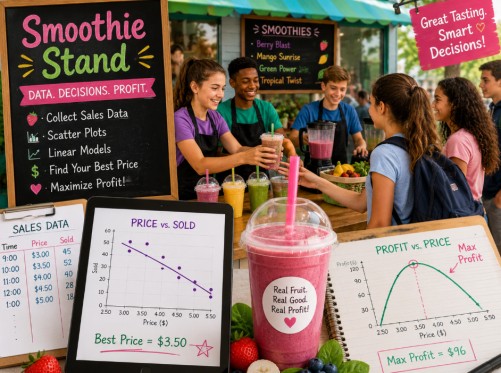
Students run a smoothie bar for a day, and every decision is a fraction problem with a real purpose. Six connected, auto-graded interactive worksheets covering multiply, divide, equivalent fractions, compare, and order. Carry-forward story keeps math meaningful. Common Core aligned. Run it in a day or across two weeks.