Develop a probability model (which may not be uniform) by observing frequencies in data generated from a chance process. *For example, find the approximate probability that a spinning penny will land heads up or that a tossed paper cup will land open-end down. Do the outcomes for the spinning penny appear to be equally likely based on the observed frequencies?*
1 interactive, auto-graded activity for 7th grade students practising 7.SP.C.7b. Mini Labs put the standard to work in a real scenario; Skill Practice builds fluency on the standard alone. Every one is randomized per student, so each learner gets their own numbers.
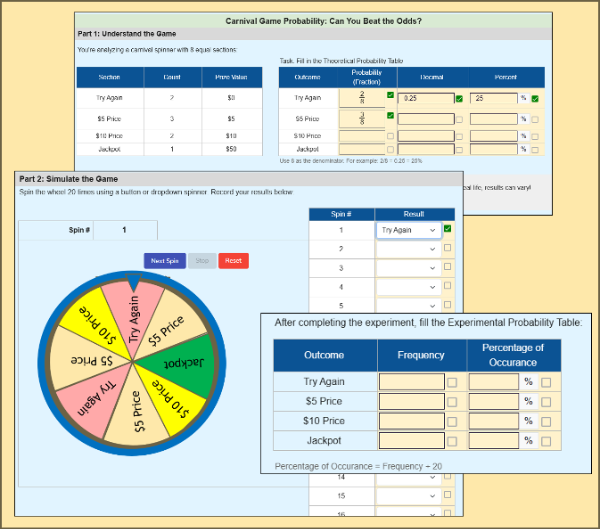
Students explore probability through a carnival spinner game. They calculate theoretical probabilities, run a 20-spin simulation, and compare theoretical and experimental probabilities.
This worksheet supports randomization — each student gets unique outcomes on every spin.