🎯 Identify and Analyze Outliers with Dot Plots – 7th Grade Statistics Worksheet
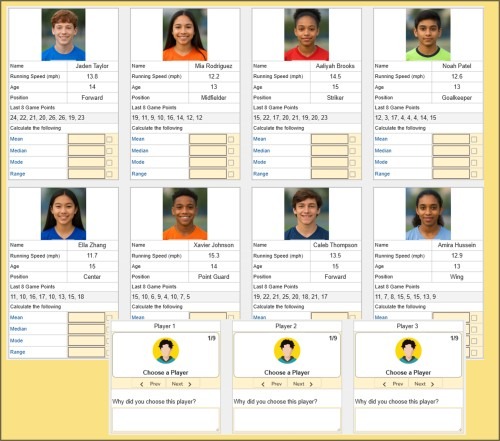
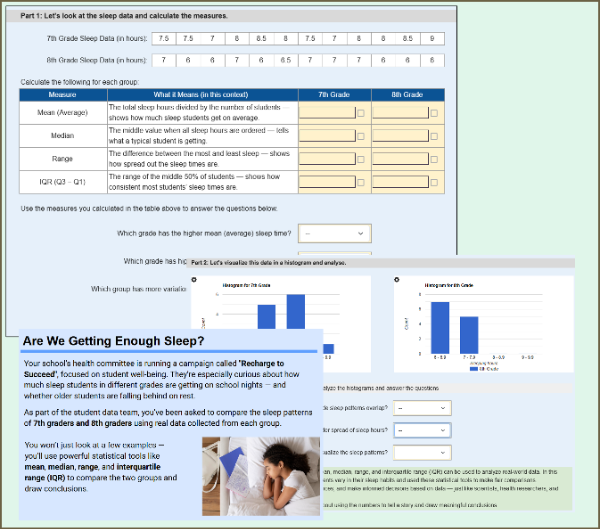
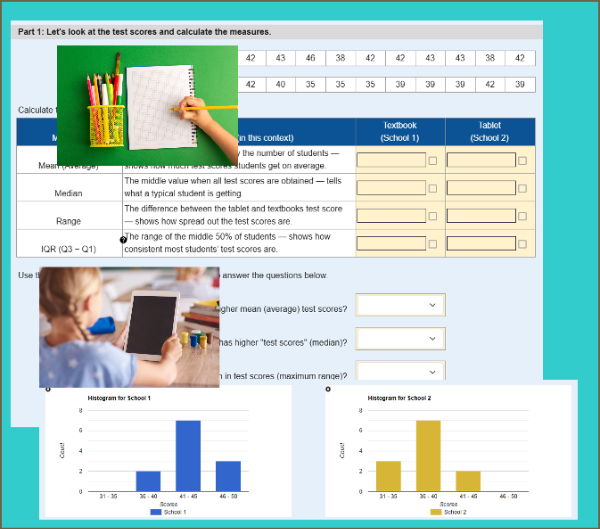
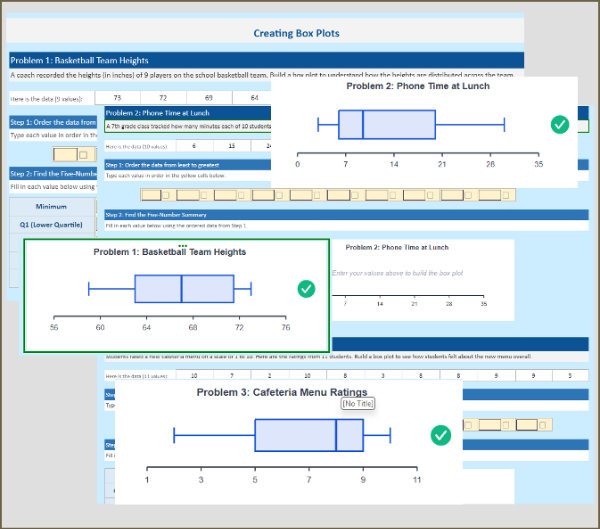
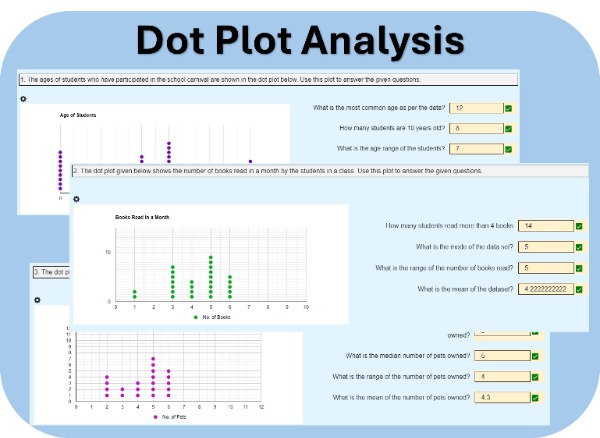
Help students build essential data analysis skills with this interactive 7th-grade worksheet focused on outlier identification and analysis using dot plots. Through four real-world data scenarios, students will explore how extreme values impact the mean and interpret their effects on a data set.
📘 Worksheet Overview:
With situations like books read in a month, weekly study hours, and commute times, students are asked to:
- Identify outliers in a dot plot
- Calculate the mean including and excluding the outlier(s)
- Analyze how outliers affect the interpretation of the data
Each question requires critical thinking and statistical reasoning, connecting visual data with mathematical calculations.
🧠 Skills Covered:
- Reading and analyzing dot plots
- Identifying and interpreting outliers
- Calculating mean values with and without outliers
- Understanding how outliers affect measures of center
📏 Standards Alignment:
- CCSS.MATH.CONTENT.7.SP.B.3 – Assess the effect of outliers on measures of center and variability using visual data representations.
🔧 Key Features:
- Real-world contexts students can relate to
- Randomized data ensures every student gets a unique set of problems
- Auto-graded for immediate feedback and efficient classroom use
- Ideal for practice, review, or mini-assessments in statistics and data interpretation
The learning objective of this worksheet activity is to help students understand the concept of outliers and their impact on statistical measures, specifically the mean. Through this activity, students will develop skills in identifying outliers in scatter plots, accurately calculating the mean of data sets with and without outliers, and analyzing how the presence of an outlier can affect the overall average.
This exercise reinforces critical thinking and data analysis skills, enabling students to interpret and make informed decisions based on data variability.
If randomization is enabled while assigning this worksheet, each student will receive a unique data set for every question. The number of data points, the location of outliers, and the overall shape of the distribution will differ from student to student.
💡 Tip: When assigning this activity to your classroom, you can optionally enable randomization to give each student a unique version of the problems. When you re-assign the same worksheet, each student will get a new set of questions, helping them master the content through repeated practice.