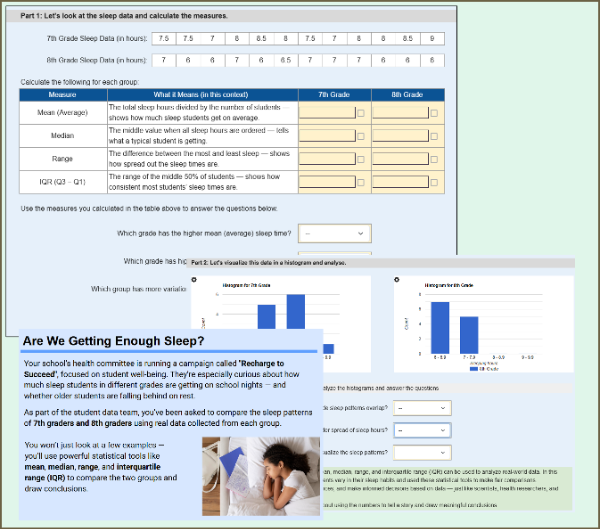
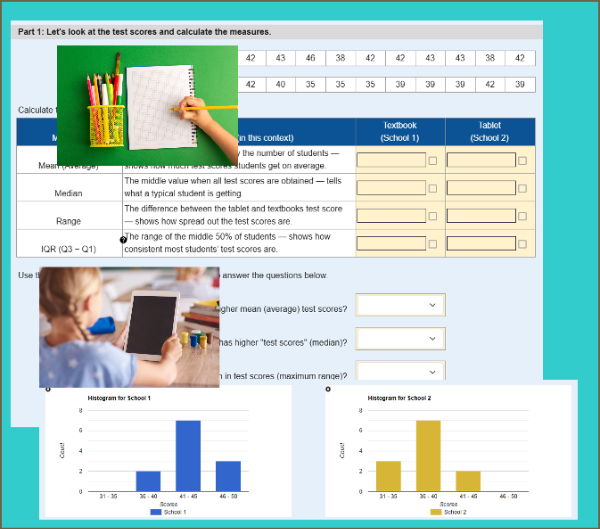
In this 6th-grade math worksheet, students will explore and analyze four different types of graphs: a scatter plot, a histogram, a bar chart, and a line chart. Each graph presents distinct data, and students are tasked with interpreting the information to answer a series of questions related to each graph.The graph presented to each student will contain a different set of points, which makes the answers different for each student, avoiding copying of answers.
Key Learning Objectives:
- Analyze Different Graph Types: Students will examine and understand the unique characteristics of scatter plots, histograms, bar charts, and line charts.
- Answer Targeted Questions: For each graph, students will answer specific questions that challenge them to think critically about the data and its implications.
Key Features:
- Auto-Graded: This interactive digital worksheet is auto-graded, eliminating the need for teachers to evaluate it manually, making it an excellent practice activity.
- Unique Questions: Each student will receive a unique set of data points to promote individual practice and understanding.
- Re-Assignable: Re-assigning the worksheet to the same classroom will generate a new set of questions for each student.
Students will interpret and analyze data presented in various graphical formats—dot plots, histograms, bar graphs, and line graphs—to:
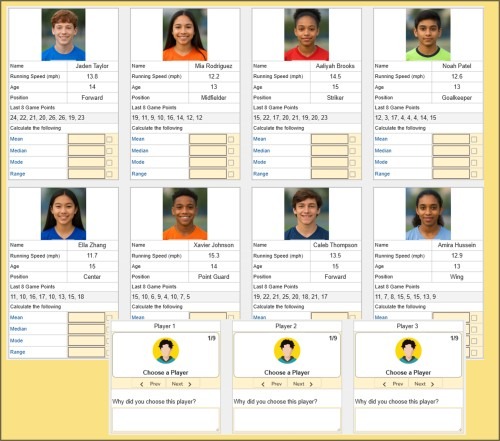
- Identify measures of center such as mode and average
- Determine ranges, frequencies, and comparative quantities
- Analyze and compare categories and trends over time
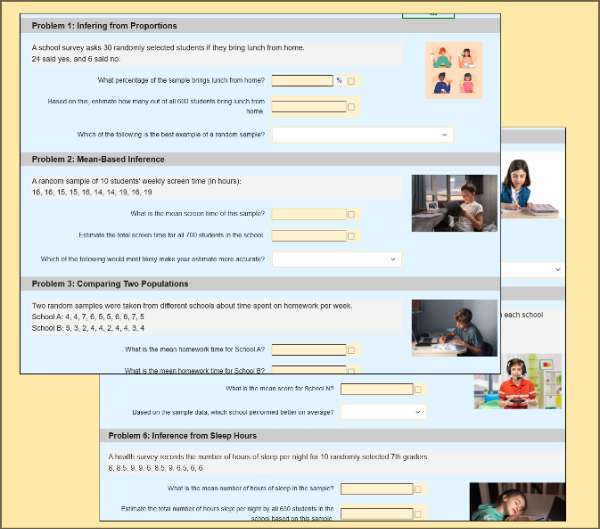
- Draw conclusions and make observations based on real-world data sets
This activity builds key skills in statistical reasoning, data interpretation, and visual analysis, aligned with 7th grade math standards for data and probability.
If randomization is enabled, each student will receive a different set of graphs with unique data values. The structure of the questions remains the same, but the data and answers will be unique for each student.
💡 Tip: When assigning this activity to your classroom, you can optionally enable randomization to give each student a unique version of the problems. When you re-assign the same worksheet, each student will get a new set of questions, helping them master the content through repeated practice.