📊 Interactive Classroom Survey: Data Collection & Chart Interpretation - A Perfect Back-to-School Activity
Start the school year off with an engaging and educational data collection activity designed to get students thinking critically about real-world data. This interactive worksheet allows students to survey their classmates on fun, relatable topics like how many siblings they have, what time they wake up for school, and which month their birthday falls in. These simple yet effective questions are a great way to break the ice and introduce students to basic data analysis.
As students respond to each question, they’ll input class data into digital input cells, immediately seeing how the chart updates in real-time. The hands-on experience helps students visualize how data works and gives them a deeper understanding of categorical data and its real-world applications.
Key Features:
- Engaging Survey Questions:
- How many siblings do you have?
- Do you have a pet?
- What’s your favorite subject?
- What time do you usually wake up on school days?
- How do you get to school?
- What’s your favorite color?
- Which month is your birthday?
- What is your favorite school day?
- Real-Time Data Visualization:
- As students enter data, the interactive charts (bar and pie charts) update instantly, allowing them to see the impact of the data they input.
- Summary & Analysis:
- After each question, students will answer summary questions, reinforcing their understanding of how data collection and interpretation work in everyday life.
Why It's Perfect for Back-to-School:
- This activity helps students get to know each other while practicing essential data skills.
- It's a fun and low-pressure way to kickstart the year, creating an interactive and collaborative learning environment.
- Students will be introduced to data interpretation in a hands-on, engaging way, setting the tone for more complex statistics concepts later on.
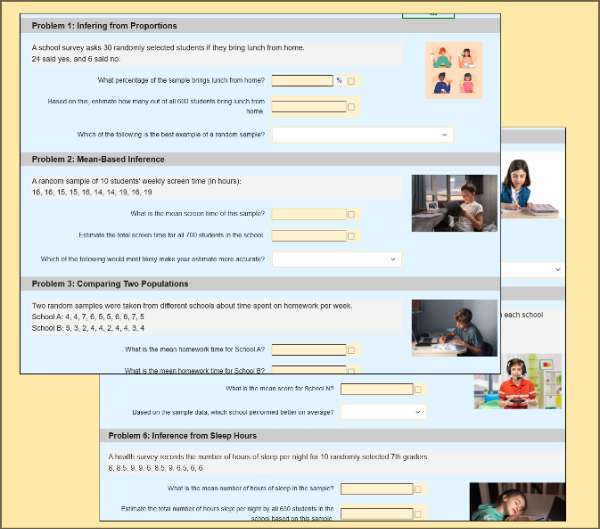
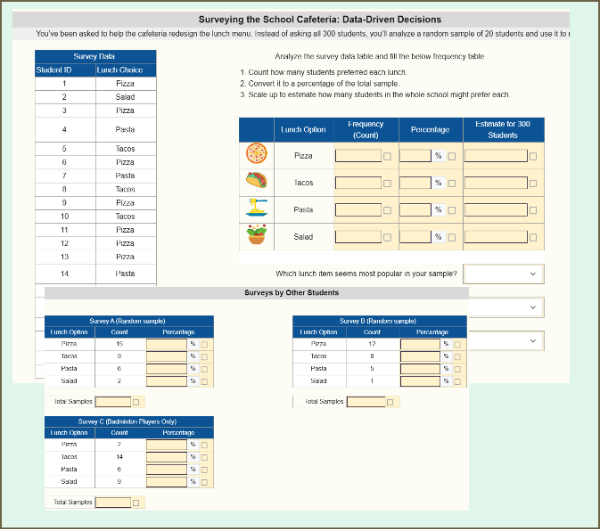
Students will learn to collect, organize, and interpret categorical data from a real-world context by conducting a classroom survey. They will practice:
- Tallying and recording frequencies for each category.
- Inputting data accurately into a table.
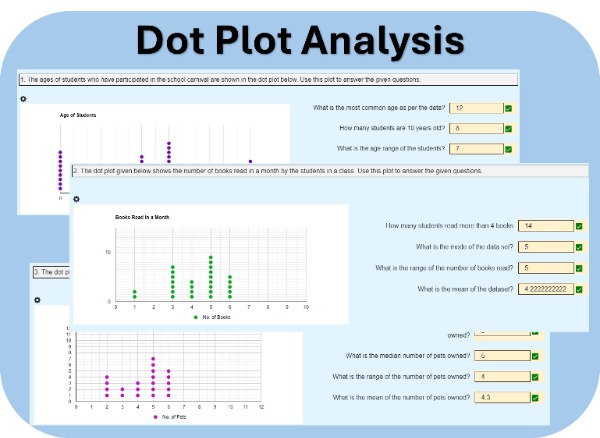
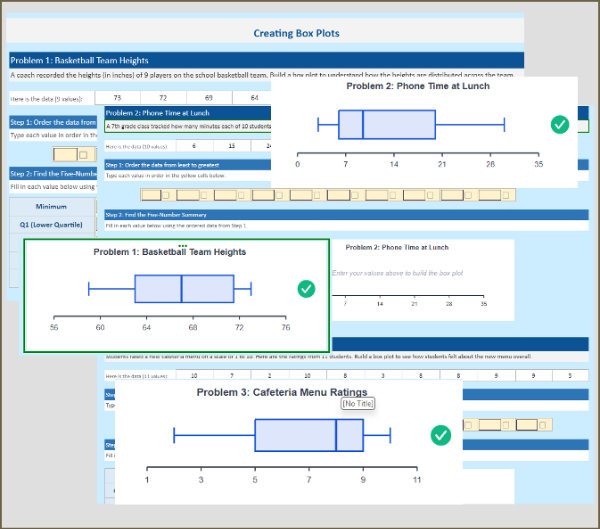
- Interpreting bar and pie charts that automatically reflect the data.
- Answering summary questions based on observed trends and distributions.
By the end of this activity, students will be able to explain how data visualization helps in understanding group preferences and distributions, and apply basic data analysis skills in a collaborative setting.